
Wrath and Patience in Contemporary Art: A Symbolic Oil Painting Exploring Human Nature
- Julia O'Sullivan of Jupigio-Artwork

- Mar 31, 2024
- 5 min read
Updated: 1 day ago
Presenting my exploration of the Seven Deadly Sins and their paradoxical counterparts, the Seven Heavenly Virtues. A profound journey into the depths of human nature and morality. By meticulously planning and executing each piece, I delve into the raw essence of each sin and virtue, capturing their complexities and contradictions with raw honesty and insight.
The inclusion of the Heavenly Virtues alongside the Deadly Sins adds layers of depth and nuance to this work, highlighting the interconnectedness of these seemingly opposite forces. Through these paintings, I confront the ugly nature of both sin and virtue, challenging viewers to confront their own moral ambiguities and contradictions.
My exploration of these themes serves as a powerful reminder of the complexities of human existence and the eternal struggle between good and evil, virtue and vice. My art invites viewers to engage in introspection and reflection, prompting them to consider the ways in which these universal themes manifest in their own lives and experiences.

Wrath and Patience: A Symbolic Exploration of Human Nature in Contemporary Art
Wrath is one of the most powerful forces within human nature.It exists alongside patience, restraint, justice, and forgiveness. Throughout history these opposing forces have shaped societies, revolutions, and the moral struggles of individuals.
This painting explores that eternal tension.
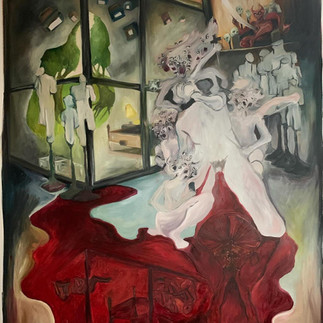
Through symbolism and narrative imagery, the work examines how wrath grows, how patience transforms it, and how the cycle between the two influences human action. It is not simply a depiction of anger, but an exploration of the deeper forces that govern how people respond to injustice, control, and the desire for freedom.
For viewers and collectors, the piece invites reflection on the complex relationship between emotion, morality, and choice.
Wrath as a Universal Human Force
Wrath is often described as one of the most destructive of the seven deadly sins. Yet it is also one of the most human responses to perceived injustice.
Across cultures and eras, anger has been both a catalyst for destruction and a force that sparks transformation. Revolutions, rebellions, and social change have frequently begun with the same spark: the moment when patience gives way to outrage.
In art, wrath becomes a visual language through which these tensions can be examined. It represents not only fury but also the moment when suppressed emotion erupts into action.
This painting captures that volatile threshold.
The Balance Between Wrath and Patience
At the heart of the work lies the dynamic relationship between two opposing forces:
Wrath, impulsive and consuming
Patience, restrained and calculating
Where wrath acts suddenly, patience waits. It observes the passage of time and measures the moment when action will have the greatest impact.
The idea that revenge is a dish best served cold reflects this balance. Patience transforms anger into something deliberate, allowing emotion to evolve into strategy rather than chaos.
Within the composition, these forces coexist in constant tension. Neither is entirely dominant, and neither is entirely innocent.
A Narrative of Power, Oppression, and Awakening
Embedded within the painting is a broader narrative about power and resistance.
Throughout history, societies have repeatedly constructed systems that benefit the powerful while restraining the many. Within such systems, individuals often endure limitations quietly, accepting the structure of their circumstances as inevitable.
But beneath that surface, pressure builds.
Eventually awareness spreads, illusions collapse, and patience gives way to action. The suppressed voice becomes impossible to contain. Wrath emerges not only as emotion but as a response to confinement and control.
The imagery within the painting captures this moment of awakening.
Eyes blaze with intensity, symbols transform into weapons, and the restrained energy of patience becomes the fuel that unleashes wrath upon the structures that created it.
The Devil as Observer
Watching from the shadows is the Devil, machete in hand.
He is not the cause of the conflict, but the witness to it.
In many moral traditions, wrath is condemned regardless of its origin. Even when anger emerges from oppression or injustice, surrendering to it still carries spiritual consequences.
The Devil’s presence reflects this paradox. The cycle of domination and rebellion ultimately feeds the same destructive forces that created it.
In this way the painting explores a difficult question:
When anger becomes justice, where does morality truly stand?
The Path Beyond Revenge
Yet beyond the violence of the cycle lies another possibility.
Outside the confines of oppression and retaliation exists a different path—one not defined by domination or vengeance. It is the possibility of liberation that does not rely on wrath.
The painting hints at this distant horizon: an open space beyond confinement where freedom exists without the need for revenge.
However, history shows that this path is rarely chosen. The intensity of anger and the satisfaction of retribution often hold a stronger pull than the quieter road toward release.
This tension between vengeance and transcendence forms the philosophical core of the work.
Symbolism in Contemporary Narrative Painting
Symbolic art has long explored themes of morality, sin, and human psychology. From medieval allegories to modern expressionist works, artists have used visual storytelling to confront the darker elements of human experience.
This painting continues that tradition through contemporary narrative imagery. It draws upon historical symbolism—wrath, the devil, instruments of power—while reinterpreting them in a modern visual language.
The result is a work that invites interpretation. Each viewer may see a different story within the same symbols.
For collectors of symbolic contemporary art, such works offer depth beyond aesthetic presence. They function as visual meditations on the forces that shape human life.
A Painting About Life, Choice, and Human Nature
Ultimately, this artwork is not simply about wrath.
It is about the fragile balance between emotion and restraint, power and resistance, destruction and liberation.
It asks viewers to consider how easily the line between justice and vengeance can blur, and how often the cycles of life repeat themselves through the same patterns of conflict and reaction.
Through its symbolism and narrative, the painting becomes a reflection of life itself—complex, contradictory, and constantly negotiating between patience and fury.
Click the image below to enter my Sinner site and celebrate your sin in style! Discover wickedly fun T-shirt designs made for those who embrace their darker side. OwnYourSin®


This gallery explores the stages of one of the Seven Deadly Sins — Wrath. From the initial groundwork to the final layers, each painting reveals the evolution of desire, excess, and self-confrontation in Julia O’Sullivan’s oil works.




Collecting Symbolic Contemporary Art
Collectors are often drawn to artworks that carry a strong narrative and emotional depth. Symbolic paintings exploring universal themes—such as justice, power, and human emotion—create lasting engagement with viewers.
Works that examine the darker aspects of human nature have appeared throughout art history, from medieval allegories of sin to modern psychological expressionism. Contemporary interpretations of these themes continue to resonate because they reflect the complexities of modern life.
For collectors interested in original oil paintings that explore symbolism and human nature, narrative works like this offer both visual presence and intellectual depth.


Comments